Best Predictive Dialer Software Solution: Features, Benefits & Guide
Best Predictive Dialer Software Solution: Features, Benefits & Guide
Modern call centers, sales teams, collection agencies, and customer service departments handle a large number of outbound calls every day. When agents manually dial every number, a significant amount of working time can be spent on busy numbers, unanswered calls, disconnected numbers, and other unsuccessful attempts.
Predictive dialer software helps businesses automate this process and create a more organized outbound calling workflow. With AI-driven technology, modern predictive dialers can go beyond basic automated dialing by using intelligent pacing, agent availability, campaign information, and customer connection data to manage calling activities more efficiently.
For businesses looking to improve outbound communication, choosing the right predictive dialer requires careful consideration of features, integrations, scalability, reporting, security, and ease of use.
What Is Predictive Dialer Software?
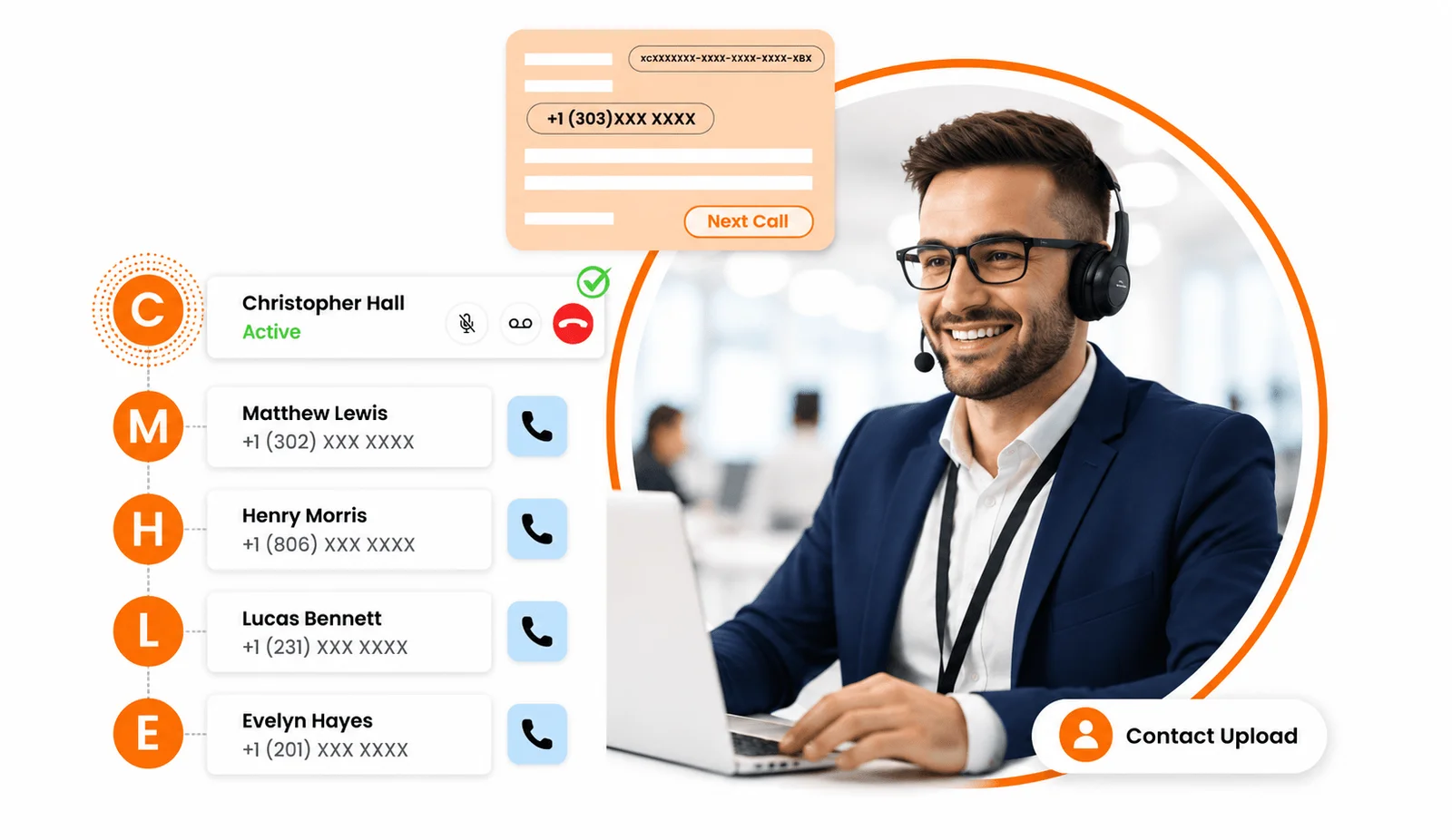
Predictive dialer software is an automated calling solution designed to manage outbound calls more efficiently. Instead of requiring agents to manually enter telephone numbers, the system can automatically dial numbers from a selected contact or campaign list.
The software can identify different call outcomes and help connect live customer calls with available agents. This allows agents to spend more time having conversations instead of manually managing the dialing process.
Predictive dialing can be useful for sales campaigns, customer service, collections, telemarketing, surveys, appointment reminders, and other high-volume outbound communication activities.
How AI-Driven Predictive Dialing Works
Traditional automated dialing focuses mainly on placing calls. AI-driven predictive dialing can introduce additional intelligence into the process.
An AI-driven system can consider factors such as agent availability, calling patterns, campaign activity, and connection rates when managing outbound calls. Intelligent pacing can help maintain a suitable flow of calls based on the available agents and campaign requirements.
This approach is designed to reduce unnecessary idle periods and help agents spend more time handling connected conversations.
AI can also support better decision-making by analyzing operational information and helping businesses understand how their outbound campaigns are performing.
The exact capabilities depend on the software platform, configuration, integrations, and business requirements.
Why Businesses Need Predictive Dialer Software
Manual calling can become difficult when a business needs to contact a large customer database. Agents may spend considerable time dialing numbers and waiting for calls to connect.
A predictive dialer can automate much of this repetitive process. This can create a more consistent calling workflow and make it easier for supervisors to manage outbound campaigns.
For organizations with large sales or customer support teams, automated dialing can also help standardize calling processes across multiple agents and campaigns.
Key Features to Look For
When selecting a predictive dialer, businesses should evaluate more than just the automatic dialing function.
1. AI-Optimized Predictive Dialing
AI optimization can help manage call pacing and agent availability to create a more efficient calling workflow.
The system can automatically connect live calls with available agents while reducing unnecessary waiting periods.
2. Progressive Dialing
Progressive dialing automatically initiates the next call after an agent completes the previous interaction.
This provides a steady workflow and can be useful when businesses want controlled outbound calling rather than aggressive high-volume dialing.
3. Preview Dialing
Preview dialing allows agents to review customer information before making a call.
This can be useful for important or sensitive conversations where agents need context before speaking with a customer.
Having relevant customer information available before the conversation can also help agents prepare for the interaction.
4. Power Dialing
Power dialing is designed for high-volume outbound campaigns. It can automatically queue and execute calls according to campaign settings.
This feature can be useful for businesses managing large calling lists and structured outreach campaigns.
5. Campaign Management
Campaign management tools allow supervisors to organize customer lists, assign agents, configure calling rules, and monitor campaign activities.
Businesses running multiple campaigns can use these tools to separate different customer segments, products, services, or calling objectives.
6. CRM Integration
CRM integration is an important consideration when choosing a modern dialer.
When the dialer works with a CRM, agents can access relevant customer information during calls and record interaction details within the appropriate customer record, depending on the integration.
This can reduce repetitive data entry and create a more connected workflow between sales and customer communication activities.
7. Call Recording
Call recording allows businesses to maintain records of customer conversations where permitted and appropriately configured.
Recordings can support quality monitoring, agent training, customer service reviews, and dispute management. Businesses should configure recording and access controls according to applicable privacy and telecommunications requirements.
8. Analytics and Reporting
Reporting provides managers with visibility into outbound calling activity.
Useful metrics may include call attempts, connected calls, talk time, agent activity, campaign performance, callbacks, and other operational measurements.
These insights can help managers understand campaign performance and identify areas that may require operational adjustments.
Benefits of an AI-Driven Predictive Dialer
Increased Agent Talk Time
One important benefit of predictive dialing is reducing the amount of time agents spend manually dialing numbers or waiting for unsuccessful calls.
By automating the dialing process, agents can focus more of their working time on connected customer conversations.
Better Calling Efficiency
AI-driven pacing can help manage the flow of outbound calls according to agent availability and campaign activity.
This can create a more structured calling environment and reduce unnecessary idle periods.
Improved Campaign Management
Businesses can organize different customer lists and campaigns within a centralized platform.
Supervisors can define campaign requirements, assign agents, and monitor calling activities according to business needs.
Greater Operational Visibility
Real-time analytics and reporting provide managers with information about ongoing campaigns and agent activities.
This can make it easier to understand what is happening within the contact center and make data-informed operational decisions.
Scalable Outbound Operations
Growing businesses may need to contact increasingly large customer databases.
A scalable predictive dialer can support expanding teams and campaigns according to the platform's technical capabilities and business requirements.
Predictive Dialer vs Manual Dialing
The main difference between predictive dialing and manual dialing is automation.
With manual dialing, agents enter telephone numbers and manage the calling process themselves. This gives agents direct control but can require more time for repetitive activities.
Predictive dialing automates much of the process. The software manages outbound calls according to configured rules and connects suitable calls with available agents.
Manual dialing may still be useful for high-value or sensitive interactions where agents need to review information before making each call. Predictive dialing is more suitable for structured, higher-volume campaigns.
Businesses should select the dialing method according to their campaign objectives, customer requirements, agent workflow, and compliance obligations.
How Lgorithm Solutions Supports Modern Outbound Calling
Lgorithm Solutions provides contact center technologies designed to support businesses managing inbound and outbound customer communication.
Its platform includes predictive and power dialing capabilities along with progressive and preview dialing options. It also provides features such as campaign management, ACD, IVR, CRM integration, voice and screen recording, analytics, and reporting.
Its AI-powered predictive dialer is designed to optimize outbound campaigns by considering factors such as pacing, agent availability, and customer connection rates. The platform also provides different dialing approaches for different interaction requirements.
For businesses specifically looking for a best predictive dialer software solution, AI-driven predictive dialing can provide a more flexible approach to managing outbound campaigns.
How to Choose the Right Predictive Dialer
Before selecting a predictive dialer, businesses should evaluate their current and future requirements.
First, consider the number of agents and expected call volume. The platform should be capable of supporting current operations while providing room for future expansion.
Second, check CRM and software integrations. A well-integrated dialer can help agents access customer information and reduce manual data entry.
Third, evaluate reporting and analytics. Supervisors should have access to useful information about campaign activity, agent performance, and customer interactions.
Businesses should also review security, access controls, call recording policies, scalability, technical support, and overall usability.
Finally, consider whether the platform provides different dialing modes. Some campaigns may require predictive dialing, while others may benefit from progressive, preview, power, or manual dialing.
Frequently Asked Questions
1. What is a predictive dialer?
A predictive dialer is software that automatically makes outbound calls from a contact list and connects answered calls with available agents according to configured rules.
2. What makes an AI-driven predictive dialer different?
An AI-driven predictive dialer can use intelligent optimization to manage factors such as calling pace, agent availability, and customer connection activity. This can help create a more efficient outbound calling workflow.
3. Who can use predictive dialer software?
Predictive dialers can be useful for contact centers, sales teams, collection agencies, customer support departments, telemarketing teams, and other organizations managing high-volume outbound calls.
4. Can predictive dialers integrate with CRM systems?
Yes. Many modern predictive dialers support CRM integration. Depending on the integration, agents can access customer information and record call activities within the CRM.
5. What is the difference between predictive and power dialing?
Predictive dialing uses automated pacing and other configured factors to manage calls and connect live interactions with available agents. Power dialing focuses on automatically executing calls at scale according to campaign settings.
6. Is progressive dialing different from predictive dialing?
Yes. Progressive dialing generally starts the next call after an agent becomes available or completes the previous interaction. Predictive dialing uses more automated pacing to manage multiple outbound calls based on agent availability and campaign conditions.
7. Can predictive dialers improve agent productivity?
Predictive dialing can reduce manual dialing and time spent waiting for unsuccessful calls. This can allow agents to spend more time handling connected customer conversations, although actual results depend on campaign setup, staffing, contact quality, and other factors.
8. What should businesses consider before choosing a predictive dialer?
Businesses should evaluate dialing modes, AI capabilities, CRM integration, campaign management, reporting, call recording, security, scalability, usability, support, and applicable compliance requirements.
Conclusion
Predictive dialer software has become an important technology for businesses that manage high-volume outbound communication. By automating calling activities, organizing campaigns, providing analytics, and connecting customers with available agents, it can help create a more structured and efficient outbound workflow.
AI-driven predictive dialing takes this approach further by using intelligent optimization to manage calling pace and agent availability. Businesses can also benefit from having multiple dialing modes, CRM integration, campaign management, reporting, and other contact center capabilities within one platform.
The right solution ultimately depends on the organization's campaign requirements, customer communication strategy, team structure, technology environment, security needs, and growth plans. A well-configured predictive dialer combined with trained agents and effective campaign management can provide a strong foundation for modern outbound contact center operations.